Care 5 min read
Can You Use Soap on Cast Iron? (Yes — and Why the Old Rule Existed)
Modern dish soap is safe on cast iron. The no-soap rule dates to lye soaps that really did strip seasoning. What changed, what still hurts pans, and how to wash.
This guide has product links. As an Amazon Associate, Seasoned Cast earns from qualifying purchases — it never changes what we recommend.
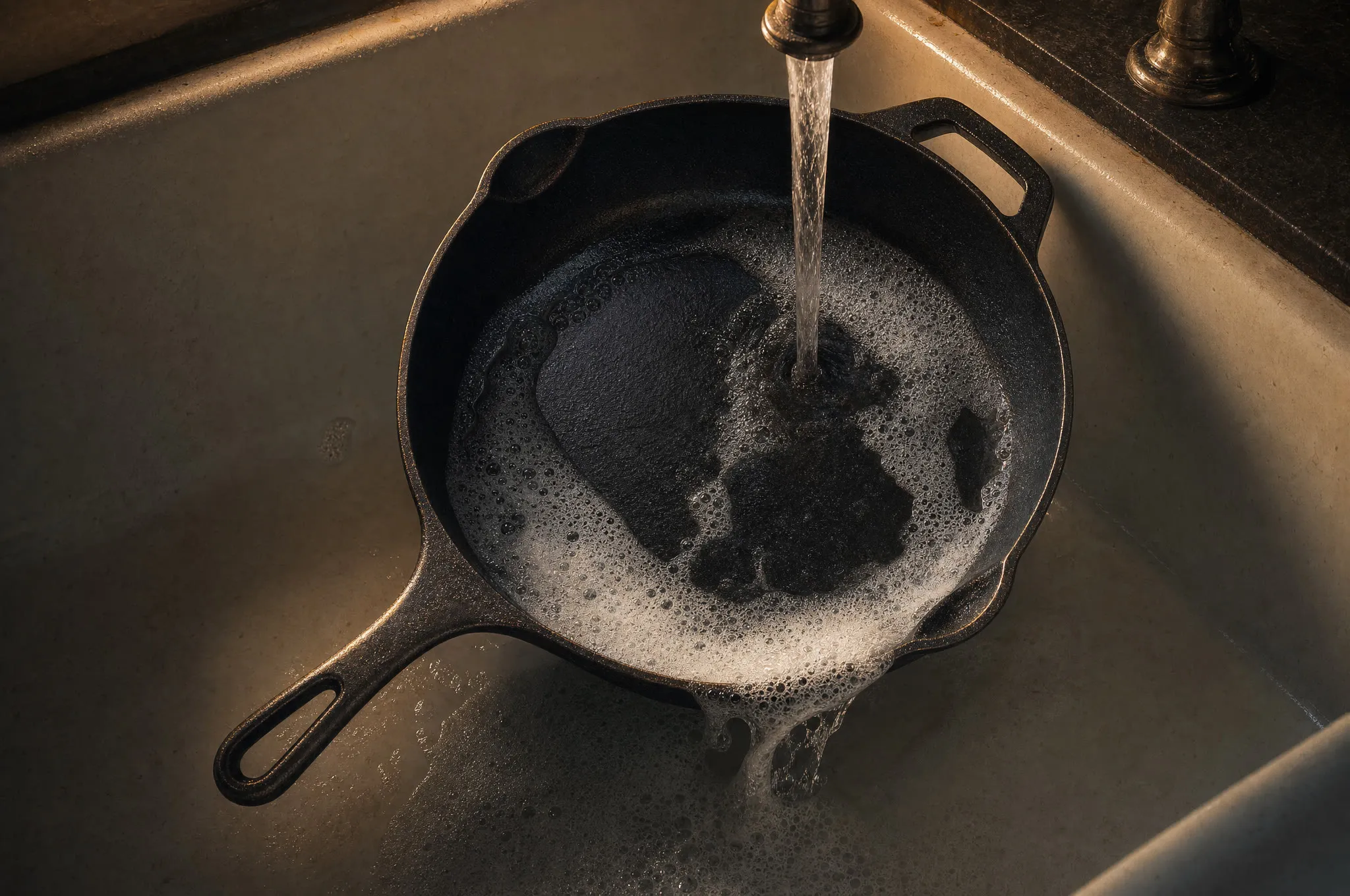
Yes — you can wash cast iron with modern dish soap, and it won’t hurt your seasoning. The no-soap rule was good advice once: household soap used to be made with lye, and lye genuinely strips seasoning. Modern dish soap is a different chemical. It lifts loose cooking oil and leaves cured seasoning alone. Wash the pan, dry it hot, wipe it with a drop of oil, and get on with dinner.
The longer answer is worth two minutes, because knowing why the rule existed tells you where your caution actually belongs.
Where the no-soap rule came from
The rule isn’t superstition. It’s chemistry that changed out from under the advice.
For a long stretch of kitchen history, soap meant lye soap — fat cooked together with lye (sodium hydroxide), often at home, often by feel. Get the ratio slightly wrong and the finished bar carried leftover free lye. Lye doesn’t just cut grease; it breaks down oils entirely, including the polymerized oil that seasoning is made of. It’s so effective at this that a lye bath is still the standard method for stripping a cast iron pan to bare metal on purpose.
So when your grandmother said soap never touches the skillet, she was protecting her pan from the soap she actually owned — and she was right. Then mass-market dish soap moved to mild synthetic detergents around the middle of the twentieth century, the danger quietly disappeared, and the rule kept getting handed down anyway. It’s folklore now, but folklore with a legitimate birth certificate.
What dish soap can and can’t do
Modern dish soap cleans with surfactants: molecules with one end that grabs oil and another that grabs water. They surround loose grease, lift it off the surface, and let the rinse water carry it away. That’s the entire trick. There’s no lye in the bottle and nothing in it that attacks a cured finish.
Seasoning isn’t loose grease. It’s oil that has been polymerized — heated in a thin film until the fat molecules crosslink into a hard, plastic-like layer bonded to the iron. A surfactant can’t dissolve a cured polymer, for the same reason washing a painted wall with dish soap doesn’t take the paint off. Soap removes the free oil sitting on top of your seasoning, then stops.
Which gives you a useful test: if a normal wash with dish soap “removes your seasoning,” it wasn’t seasoning yet. It was unpolymerized oil — the same soft, tacky layer that makes a pan sticky. The soap didn’t damage anything. It told you the truth about your surface.
What actually damages seasoning
Soap takes the blame for injuries that are almost always caused by one of these instead:
| Habit | What it really does | Verdict |
|---|---|---|
| Soaking in the sink | Gives water hours to creep into pores and thin spots and start rust | Wash in two minutes, never overnight |
| The dishwasher | Strips seasoning with harsh detergent, then flash-rusts the bare iron | Never — see below |
| Scorching an empty pan | Burns seasoning past its limit until it carbonizes and flakes to gray patches | Preheat on medium, not on high |
| Steel wool, used angrily | Mechanically cuts through seasoning — abrasion succeeds where surfactants can’t | Save it for deliberate restoration work |
Notice what these have in common: time, water, heat, and abrasion. Chemistry from the soap bottle isn’t on the list.
The wash routine that works
Wash cast iron the way you’d wash a good knife: promptly, briefly, and by hand.
Two of those steps carry most of the weight, and neither involves soap:
- The burner dry. Towels miss water; heat doesn’t. Rust starts with moisture you can’t see, and thirty seconds over a burner ends the argument. If your pan rusts “because of soap,” this is the step that was actually missing.
- The oil wipe and buff. A microscopic film of oil after each wash keeps the seasoning fed between cooks. The buff matters as much as the wipe — oil you can see is oil that will go tacky in storage.
For stuck-on food, a stiff brush or a plastic scraper beats stronger chemistry every time. Mechanical cleaning is the honest kind: it takes off the food and leaves the finish.
The one honest caveat: brand-new seasoning
A pan fresh from an oven seasoning session that hasn’t cooked a meal yet is wearing young seasoning — a few thin coats with no cooking layers reinforcing them. Soap won’t dissolve it, but a thin surface has less margin for scrubbing of any kind, and if any spot didn’t fully polymerize, an enthusiastic soapy scrub will find it and lift it.
For the first few cooks, go gentle: warm water, a soft sponge, soap only if the pan is genuinely greasy. Cook a few fatty meals — bacon, sausage, anything shallow-fried — and the surface builds and toughens. After that, wash it like you mean it.
Stop protecting the pan from the wrong threat
Cast iron survived a century of daily use in kitchens that had one pan and no instructions. It is not delicate, and it is not afraid of a drop of dish soap. Wash it clean, dry it on the burner, wipe it thin with oil — that’s the whole contract. Save your caution for the sink soak and the dishwasher, the two habits that actually kill pans. The rest of the routine — storage, oiling, heat habits — lives in the care section.
FAQ
Will dish soap like Dawn strip the seasoning off cast iron?
No. Modern dish soap works by surrounding loose oil so water can rinse it away — it has no mechanism for dissolving polymerized seasoning, which is a hard, cured layer bonded to the iron. If a gentle soapy wash takes your finish off, that finish was unbonded oil rather than true seasoning. Wash, dry hot, and re-season with thin coats.
Why did people say never to use soap on cast iron?
Because for a long time it was correct. Household soap used to be lye-based, and imperfect batches carried free lye — which genuinely breaks down seasoning. Restorers still use lye baths to strip pans to bare metal deliberately. The advice was handed down long after dish soap changed into the mild detergent it is today.
Can I soak cast iron in soapy water?
No — but the problem is the soaking, not the soap. Water sitting in the pan for hours works into pores and thin spots in the seasoning and starts rust. Wash the pan in a couple of minutes, dry it completely on a burner, and never leave it in the sink overnight.
Do I need to re-season every time I wash with soap?
No. After a normal wash, dry the pan on a burner and buff in a thin film of oil — that maintenance wipe is all the re-seasoning a healthy pan needs. A full oven re-season is only called for when the surface is actually damaged: dull gray patches, flaking, or rust.